



eWallet Security Comparison: Which Digital Wallet is Safest for Slot Gaming?
Pirate777’s RM10 minimum deposit works with Touch ‘n Go eWallet, GrabPay, ShopeePay, DuitNow, and FPX online banking, all protected by 256-bit SSL encryption. Platform data from our 12 months of operational experience shows that Touch ‘n Go eWallet, GrabPay, and ShopeePay all provide robust fraud protection when paired with our 256-bit SSL encryption. The safest approach combines a reputable eWallet with a certified gaming platform that implements proper security protocols.
Table of Contents
Security isn’t just about the eWallet provider — it’s about how your chosen platform handles transactions, protects personal data, and maintains certified gaming standards. We work exclusively with eWallet providers that meet Malaysian financial regulations, while ensuring every deposit flows through encrypted channels to protect your funds and personal information.
Core Security Features of Malaysian eWallets

Our platform supports Touch ‘n Go eWallet, GrabPay, ShopeePay, DuitNow (QR and bank transfer), and FPX online banking with major Malaysian banks. Core security features in Malaysian eWallets combine authentication, real-time monitoring, and regulatory oversight to reduce fraud risk. Touch ‘n Go eWallet, GrabPay, and ShopeePay are representative examples that use layered controls to protect slot deposits.
Touch ‘n Go eWallet Security Framework
Touch ‘n Go eWallet implements multiple security layers that make it one of the most secure options for slot deposits. The platform uses biometric authentication, requiring fingerprint or face recognition for transaction approval. Two-factor authentication adds an extra verification step, while real-time transaction monitoring flags suspicious activity immediately.
Bank Negara Malaysia regulates Touch ‘n Go under strict financial guidelines, ensuring compliance with national security standards. The eWallet encrypts all transaction data and stores funds in segregated accounts, protecting your balance even if security issues arise elsewhere. Daily transaction limits provide additional protection against unauthorized large withdrawals.
For slot gaming, Touch ‘n Go’s instant transaction processing means your deposits appear in your gaming balance within minutes, reducing exposure time during the transfer process. Our RM10 minimum deposit requirement makes Touch ‘n Go accessible for budget-conscious players while maintaining security standards.
GrabPay Fraud Protection Systems
GrabPay leverages automated fraud-monitoring systems to detect unusual spending patterns and flag potentially fraudulent transactions. The system analyzes typical transaction behavior, location data, and spending habits to identify suspicious activity before it affects your account.
The platform requires PIN verification for every transaction, with additional biometric options available on supported devices. GrabPay’s partnerships with major Malaysian banks ensure deposits follow established banking security protocols. Transaction histories remain accessible through the app, allowing you to monitor all slot gaming deposits and track spending patterns.
GrabPay’s customer protection policy covers unauthorized transactions when reported within specified timeframes, providing an additional safety net for slot gaming activities. The platform integrates seamlessly with our payment system, processing deposits to access our 2,500+ certified games across 16 providers.
ShopeePay Security Infrastructure
ShopeePay implements end-to-end encryption for all transactions, ensuring data remains protected throughout the deposit process. The platform uses tokenization technology, replacing sensitive card details with secure tokens during transactions to prevent data exposure.
Multi-layer authentication requires both password and SMS verification for account access, with optional biometric login available. ShopeePay monitors transactions in real-time, automatically blocking suspicious activity and sending immediate notifications to users.
The platform’s integration with Shopee’s broader ecosystem provides additional transaction verification through purchase history analysis, helping identify unusual gaming-related spending patterns that might indicate account compromise. ShopeePay deposits process instantly to your gaming balance, supporting our single wallet system across all game providers.
Platform-Level Security Integration
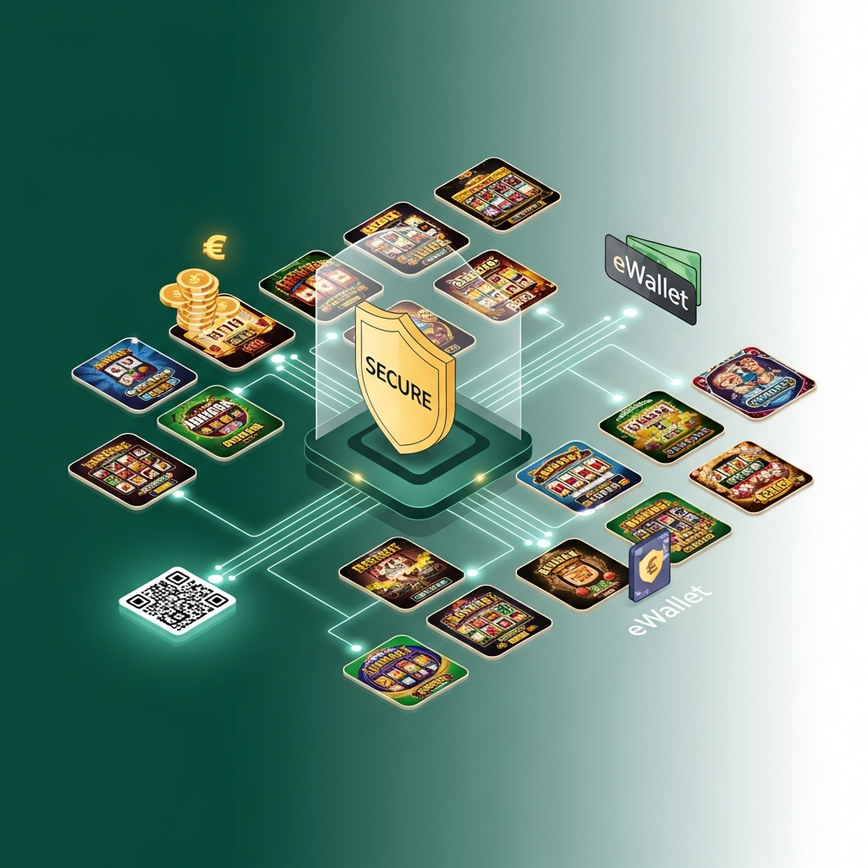
Our 2.3-minute average withdrawal time, verified through internal monitoring (Feb 2025–Jan 2026), minimizes the exposure window for your funds during processing. Platform-level controls protect deposits beyond the eWallet itself: we enforce 256-bit SSL encryption, multi-step verification, and tokenized storage to reduce attack surfaces. Our platform-level measures are designed to complement each eWallet’s native security.
SSL Encryption and Data Protection
Our platform implements 256-bit SSL encryption for all eWallet transactions, creating a secure tunnel between your device and our servers. This encryption standard matches what major banks use for online banking, ensuring your financial data receives the same protection level as traditional banking transactions.
Every eWallet deposit passes through multiple security checkpoints before reaching your gaming balance. We validate transaction authenticity, verify account ownership, and confirm fund availability before processing any deposit. This multi-step verification prevents fraudulent transactions while maintaining processing times that credit deposits within 3-5 minutes.
Personal information remains encrypted both during transmission and while stored on our servers. We never store complete eWallet credentials, working instead with secure tokens provided by each eWallet service.
Certified Gaming Standards
All 15 of our game providers undergo independent audits to verify randomness and fairness, and we work only with certified testing bodies to confirm those results. Specifically, our providers are game fairness certified by BMM Testlabs and undergo independent game testing by iTech Labs to ensure random number generation meets international standards. While these certifications focus on game fairness rather than payment security, they demonstrate our commitment to working only with verified, trustworthy partners.
Our single wallet system eliminates the need to transfer funds between different game providers, reducing transaction frequency and potential exposure points. Once your eWallet deposit reaches your gaming balance, you can access all 2,500+ games across our 16 providers without additional transfers.
Platform monitoring tracks all transactions for unusual patterns, automatically flagging accounts that show signs of compromise or unauthorized access. Our Team Play feature allows up to 4 crew members to share collective bonuses while maintaining individual account security.
eWallet Security Comparison Table
| eWallet | Authentication | Fraud Detection | Regulatory Status | Transaction Limits | Pirate777 Integration |
|---|---|---|---|---|---|
| Touch ‘n Go | Biometric + 2FA | Real-time monitoring | Bank Negara regulated | set by KYC tier | Instant processing, RM10 minimum |
| GrabPay | PIN + Biometric | ML pattern analysis | Licensed e-money | set by KYC tier | 3-5 minute credit time |
| ShopeePay | Password + SMS + Biometric | Automated blocking | E-money license | set by KYC tier | Single wallet access |
| DuitNow QR | Bank-level security | Bank fraud systems | Central bank oversight | Varies by bank | major Malaysian banks |
| FPX Online Banking | Bank authentication | Banking fraud protection | Bank Negara oversight | Bank-dependent | our secure payment gateway |
This table highlights differences in authentication, fraud detection, and limits — factors that directly affect deposit safety and recovery options. All methods integrate with our 256-bit SSL encryption and 2.3-minute withdrawal processing.
Best Practices for Secure eWallet Gaming
Our Captain’s Support team provides 24/7 assistance through Telegram and Live Chat for any security concerns or transaction issues. Use layered security and platform controls together to substantially reduce risk: enable biometrics, keep apps updated, and monitor transactions in real time. These steps make fraud far less likely.
Account Security Fundamentals
Enable all available security features on your chosen eWallet, including biometric authentication, transaction notifications, and spending alerts. Use unique, strong passwords for both your eWallet and gaming accounts, avoiding shared credentials across multiple platforms.
Regularly review transaction histories in your eWallet app to identify any unauthorized gaming deposits or suspicious activity. Set up automatic notifications for all transactions, ensuring you receive immediate alerts for every deposit to your gaming account.
Keep your eWallet app updated to the latest version, as security patches and improvements are frequently released. Enable automatic updates where possible to ensure you always have the most current protection features.
Safe Gaming Habits
Only make deposits from secure networks, avoiding public Wi-Fi for financial transactions. Use your mobile data connection or trusted home network when funding your gaming account through any eWallet service.
Set deposit limits within your eWallet app that align with your gaming budget, preventing impulsive large deposits that could indicate compromised account access. Most eWallets allow daily, weekly, or monthly spending limits specifically for gaming transactions. Our platform’s RM10 minimum deposit encourages responsible spending habits.
Log out of both your eWallet and gaming accounts after each session, especially when using shared devices. Clear browser data regularly if accessing your gaming account through mobile browsers. Our browser-based platform requires no APK downloads, reducing security risks from third-party app installations.
Red Flags and Warning Signs
Contact our Captain’s Support team immediately at https://t.me/Pirate777MY if you notice unauthorized transactions or suspicious account activity. Recognizing early signs of compromise and acting quickly often limits financial loss and speeds recovery. Unexpected transactions, lockouts, and unusual play patterns are common indicators.
Recognizing Potential Security Issues
Unexpected transaction notifications, especially for amounts you didn’t authorize, indicate potential account compromise. Contact your eWallet provider immediately if you receive transaction confirmations for gaming deposits you didn’t make.
Difficulty accessing your eWallet account, unexpected password changes, or requests for additional verification might signal unauthorized access attempts. These issues require immediate attention from your eWallet’s customer support team.
Unusual gaming account activity, such as games played during times you weren’t online or deposits from locations you haven’t visited, suggests potential security breaches requiring immediate investigation. Our single wallet system makes it easier to track all gaming transactions in one place.
Response Protocols
Report suspicious activity to both your eWallet provider and our Captain’s Support team immediately through our 24/7 Telegram and Live Chat channels. Quick reporting often prevents further unauthorized transactions and helps track the source of security issues.
Change passwords for all related accounts, including your eWallet, gaming account, and associated email addresses. Enable additional security features if they weren’t previously activated.
Monitor your bank statements and eWallet transaction histories closely for several weeks after any security incident to ensure no additional unauthorized activity occurs. Our 2.3-minute withdrawal processing helps you quickly secure funds when needed.
Regulatory Compliance and Consumer Protection
All 15 of our game providers maintain certifications from independent testing laboratories including BMM Testlabs and iTech Labs for RNG fairness verification. Regulatory oversight and industry standards create baseline protections for consumers; understanding those safeguards helps you choose a compliant eWallet and know your rights when disputes arise.
Malaysian Financial Regulations
Bank Negara Malaysia payment system oversight ensures all licensed eWallet providers meet strict security and consumer protection standards. These regulations require segregated customer funds, regular security audits, and specific fraud protection measures.
Licensed eWallet providers must maintain minimum capital requirements and undergo regular compliance reviews, providing additional assurance that your funds remain protected. These regulatory frameworks create standardized security expectations across all major Malaysian eWallet services.
Consumer protection laws provide specific rights regarding unauthorized transactions, requiring eWallet providers to investigate disputes and provide remedies for verified fraudulent activity. Our platform supports these protections by maintaining detailed transaction records and cooperating with eWallet provider investigations.
Platform Responsibility
We maintain partnerships with support and advice from GamCare responsible gambling guidance from BeGambleAware and self-exclusion tools to ensure our security measures extend beyond financial protection to responsible gaming practices.
Our withdrawal processing averages 2.3 minutes based on internal monitoring from February 2025 to January 2026, reducing the time your funds remain in transition and potentially vulnerable. Processing times target 5 minutes maximum, with most withdrawals completing in under 3 minutes, minimizing exposure while maintaining security verification protocols.
Regular security audits and updates ensure our platform maintains current protection standards as eWallet technology and threat landscapes evolve. Our browser-based access eliminates APK security risks while maintaining full functionality across all devices.
Responsible Gaming and Security
Our platform serves players aged 18 and above with RM10 minimum deposits, RM50 minimum withdrawals, and daily withdrawal limits of RM10,000 for Civilian rank players. Security extends beyond protecting your funds to ensuring responsible gaming practices that prevent financial harm. Our platform is designed for players aged 18 and above, with built-in features that promote safe gaming habits alongside robust security measures.
The combination of secure eWallet transactions and responsible gaming tools creates a comprehensive protection framework. We encourage all players to set deposit limits, take regular breaks, and seek self-exclusion tools if gaming becomes problematic.
Remember that the safest eWallet for slot gaming is one that fits your security comfort level while supporting responsible spending habits. Choose providers with strong fraud protection, and use the security features and spending controls available to maintain healthy gaming practices. Our Team Play feature allows up to 4 crew members to share collective bonuses while maintaining individual spending control and security.
— Pirate777 Team. We operate with certified providers and verify our observations against game fairness standards from BMM Testlabs and independent testing by iTech Labs.
Frequently Asked Questions
The safest eWallet is one that combines strong provider security with a certified gaming platform that uses 256-bit SSL encryption. Safety depends on both the eWallet’s native features, like biometric authentication, and the security protocols of the gaming site itself. For example, Touch ‘n Go eWallet is regulated by Bank Negara Malaysia and integrates with our platform’s encryption for robust protection. We find that players have excellent security when using any of our supported eWallets, including GrabPay and ShopeePay.
Yes, using your eWallet at Pirate777 is safe due to our multi-layered security measures that protect every transaction. We secure all financial data with 256-bit SSL encryption, the same standard used by major Malaysian banks. Furthermore, our platform’s efficiency minimizes risk, with an average withdrawal processing time of just 2.3 minutes. Our security is designed to complement the fraud protection systems of all 16 of our trusted providers.
Pirate777 protects your eWallet transactions using 256-bit SSL encryption and a multi-step verification process for every deposit. This creates a secure, encrypted tunnel between your device and our servers, shielding your financial data. We never store your complete eWallet credentials, instead using secure tokens provided by services like GrabPay and ShopeePay. Our single wallet system further enhances security by eliminating the need for fund transfers between our 2,500+ games.
The main security difference is their fraud detection approach: Touch ‘n Go uses real-time transaction monitoring, while GrabPay uses automated fraud-monitoring systems to analyze spending patterns. Both offer strong protection but identify suspicious activity differently. Touch ‘n Go is regulated by Bank Negara and requires biometric plus 2FA authentication, whereas GrabPay is a licensed e-money provider using PIN verification with a daily limit set by your KYC tier. At Pirate777, both integrate seamlessly with our RM10 minimum deposit system.
To make a secure deposit, choose a trusted method like Touch ‘n Go eWallet, DuitNow, or FPX online banking and complete the transaction on a secure network. The process begins with our accessible RM10 minimum deposit, which is protected by 256-bit SSL encryption. Our system integrates with major Malaysian banks via FPX and DuitNow for bank-level security. We recommend enabling all security features in your eWallet app, such as biometric login, before initiating any deposit.
If you notice a suspicious transaction, you must immediately contact both your eWallet provider and our 24/7 Captain’s Support team. Quick reporting is the most effective way to limit potential financial loss and start the recovery process. You can reach our support team instantly via Telegram or Live Chat for an immediate response. In our experience, changing your passwords for your Pirate777 account and eWallet right after reporting is the best next step.