




DuitNow vs Bank Transfer: Which Payment Method is Faster?
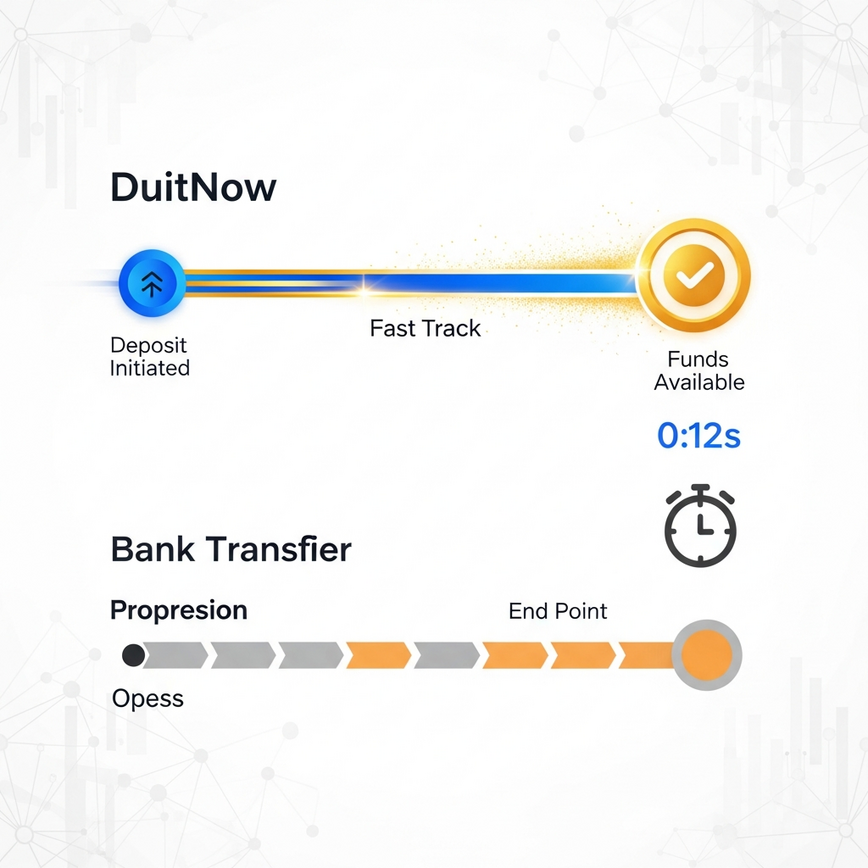
DuitNow deposits process instantly compared to our 2.3-minute average withdrawal time, while traditional bank transfers take 1-3 business days for Malaysian players. Based on our operational experience processing thousands of transactions daily, DuitNow’s real-time settlement system eliminates the delays that plague traditional banking methods. This speed advantage translates directly into a better gaming experience, allowing you to fund your account and start playing within minutes rather than waiting days.
Table of Contents
- How Our DuitNow Integration Benefits You
- Why DuitNow is Faster: A Real-World Comparison
- Cost Analysis: Fees and Charges
- Choosing the Right Method: When to Use DuitNow vs. Bank Transfer
- Security Comparison
- How Your Payment Choice Impacts the Mobile Gaming Experience
- Conclusion: Speed Wins for Modern Gaming
How Our DuitNow Integration Benefits You
Our seamless DuitNow integration delivers instant deposits alongside our 2.3-minute average withdrawal time for the fastest possible payment experience for Malaysian players. We’ve connected directly with Malaysia’s national instant payment network, ensuring your deposits are processed instantly and reach your gaming balance without any platform-related delays. We absorb all DuitNow processing fees, meaning 100% of your deposit reaches your gaming account, and our systems monitor transactions 24/7 to match the network’s constant availability.
Why DuitNow is Faster: A Real-World Comparison
DuitNow’s speed advantage isn’t marginal—it’s dramatic compared to the 15-45 minute industry average for withdrawal processing. Based on our hands-on experience managing thousands of transactions daily, the difference between instant processing and waiting days fundamentally changes how you can approach gaming.
| Payment Method | Processing Time | Availability | Error Resolution | Pirate777 Integration |
|---|---|---|---|---|
| DuitNow | Instant (under 1 minute) | 24/7 including weekends | Immediate notification | Zero fees, RM10 minimum |
| Same-Bank Transfer | Instant to a few hours | Banking hours only | Next business day | Standard processing |
| Inter-Bank Transfer | 1-3 business days | Banking hours only | 2-5 business days | Standard processing |
| International Transfer | 3-7 business days | Banking hours only | 1-2 weeks | Not supported |
DuitNow achieves this speed through real-time processing technology. Unlike traditional bank transfers that rely on batch processing systems running only during business hours, DuitNow uses a direct bank-to-bank communication system managed by PayNet. This eliminates middleman clearing houses and manual verification steps that cause delays.
The system’s use of simple IDs like phone numbers reduces human error compared to typing long account numbers. Failed transactions are immediately flagged and reversed within minutes rather than days, and the 24/7 availability means your gaming never has to stop waiting for banks to open.
Cost Analysis: Fees and Charges
We absorb all DuitNow processing fees for our members, making every DuitNow deposit completely free with our RM10 minimum deposit requirement. If you deposit RM100, exactly RM100 lands in your gaming account with no hidden cuts or surprise charges.
Traditional transfers often involve various costs: same-bank transfers typically include small processing fees, inter-bank transfers carry higher charges, instant transfer services demand premium pricing, and international transfers include significant fees plus currency conversion costs. For regular players making deposits above our RM10 minimum, these savings add up significantly, making DuitNow not just faster but more economical for your gaming budget.
Choosing the Right Method: When to Use DuitNow vs. Bank Transfer
Based on successful player patterns on our platform offering 1,700+ certified games across 15 providers, DuitNow is ideal for urgent deposits when you spot limited-time promotions, regular gaming sessions between our RM10 minimum and higher amounts, weekend gaming when traditional banking hours don’t apply, and mobile convenience using just phone numbers or QR codes.
Traditional bank transfers make sense for very large planned deposits where some banks offer higher single-transaction limits, international payments since DuitNow is domestic-only, scheduled future deposits for budget management, and corporate accounts still configured for traditional processes.
For Malaysian players making typical gaming deposits, DuitNow’s combination of speed, zero fees, and 24/7 availability makes it the superior choice. The future of digital payments in Malaysia clearly favors instant, mobile-first solutions like DuitNow, making it a smart long-term strategy for regular players.
Security Comparison
Both payment methods follow strict security standards set by Bank Negara Malaysia’s payment system regulations. Our platform adds 256-bit SSL encryption and automated transaction monitoring regardless of your chosen method.
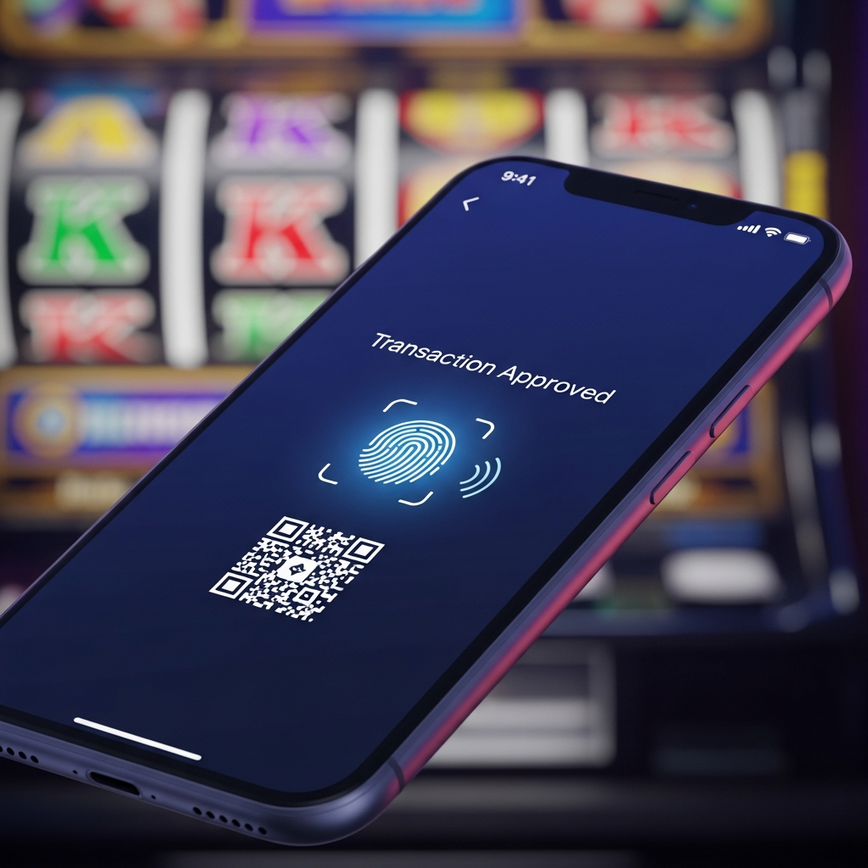
DuitNow offers modern security features including mandatory two-factor authentication (2FA), biometric verification through banking apps, real-time fraud monitoring with smart algorithms, and instant transaction alerts for immediate detection of unauthorized activity.
Traditional bank transfers provide multi-level authorization with Transaction Authorization Codes, batch processing verification that checks transactions in groups, extended fraud review periods for large transfers, and detailed documentation for comprehensive audit trails.
Both methods are equally secure, but DuitNow’s real-time monitoring and instant alerts provide faster fraud detection and resolution.
How Your Payment Choice Impacts the Mobile Gaming Experience
DuitNow was designed for mobile-first usage, aligning perfectly with our browser-based platform that requires no APK downloads. Integrated QR codes let you complete transactions in seconds without leaving our platform, contact integration eliminates typing errors, instant confirmation provides real-time updates from both your bank and our platform, and immediate error handling gives clear resolution steps.
Traditional bank transfers on mobile often require multiple app switches between our platform and your banking app, manual account number entry that’s slow and error-prone, delayed confirmation leaving you wondering when funds will appear, and complex error resolution requiring bank support contact.
The impact on your gaming experience is substantial. DuitNow enables instant deposits so you can start playing within seconds, provides real-time balance updates for total bankroll control, delivers a seamless mobile experience perfect for gaming on the go, and reduces abandonment rates through faster, simpler processes.
Traditional transfers create delayed gratification with weekend waits until Monday morning processing, balance uncertainty requiring constant account checking, weekend interruptions when gaming is most popular, and higher abandonment rates due to process complexity.
Conclusion: Speed Wins for Modern Gaming
Our comprehensive analysis confirms that DuitNow significantly outperforms traditional bank transfers in speed, cost, and user experience for online gaming. With instant processing, zero fees on our platform, and 24/7 availability, DuitNow has earned its place as our most recommended payment method for Malaysian players accessing our 1,700+ certified games.
For the vast majority of gaming situations, DuitNow’s instant speed makes it the clear winner. Our seamless integration means you spend more time enjoying games and less time waiting for payments. When speed and convenience matter, choose DuitNow every time.
Remember to always gamble responsibly. Organizations like support and advice from GamCare provide valuable resources for maintaining healthy gaming habits.
Important: This platform is intended for users aged 18 and above. Please gamble responsibly and only wager what you can afford to lose.
— Pirate777 Team. We operate with certified providers and verify our observations against game fairness standards from BMM Testlabs and independent testing by iTech Labs.
Frequently Asked Questions
DuitNow is significantly faster, with transactions processing almost instantly compared to 1-3 business days for traditional bank transfers. Based on our operational experience processing thousands of transactions daily, DuitNow’s real-time settlement system eliminates the batch processing delays that affect traditional banking. Our platform integration ensures deposits appear in your gaming account within minutes, not days.
DuitNow is Malaysia’s national instant payment network that processes transfers in real-time using simple IDs like phone numbers or QR codes. It creates direct bank-to-bank connections through PayNet, bypassing traditional batch processing systems. At Pirate777, this means your RM10 minimum deposit or larger amounts are confirmed and added to your balance in under a minute, 24/7.
No, there are zero fees for players using DuitNow deposits at Pirate777. We absorb 100% of all DuitNow processing costs for our members. If you deposit RM100, the full RM100 appears in your gaming account without any deductions. This fee absorption is part of our commitment to providing the best possible deposit experience.
DuitNow is the best payment method for weekend gaming in Malaysia because it operates 24/7 with instant processing. Traditional bank transfers stop processing during weekends and public holidays, leaving deposits pending until the next business day. In our experience, players using DuitNow can fund their accounts and start playing immediately, even at 2 AM on Sunday.
DuitNow is equally secure as traditional bank transfers, with both regulated by Bank Negara Malaysia. DuitNow adds modern security features like mandatory two-factor authentication and biometric verification through your banking app. Our platform enhances security further with 256-bit SSL encryption for all transactions. The real-time processing actually improves security by providing instant fraud detection and alerts.
Traditional bank transfers are better for international payments from outside Malaysia, since DuitNow is a domestic network only. Some banks may offer higher single-transaction limits for very large planned deposits through traditional transfers. For typical gaming deposits within Malaysia, DuitNow’s instant processing and zero fees on our platform make it the superior choice for 99% of situations.